War News Today

Donald Trump, Global Conflict, and Power Politics in 2026: Leadership, Crisis, or Chaos?

Is Trump really the god he thinks he is? It seems almost unreal: you accuse a country of illegally producing nuclear weapons. Then you kill her president and spiritual leader. And then you pull the total economy of that country entirely in your direction?

Understanding Modern Politics: Complexity or Collective Confusion?

Please note! I am not an expert on world politics as a whole or on the entire economy, but as I wrote before, I think that we are either completely insane and/or we should start believing what Nostradamus already wrote in the 1500s. But is politics really such a difficult subject? Is politics really such a difficult profession?

Trump’s Threats to Iran: Escalation and Diplomatic Breakdown

Yesterday, 05-04-2026, there was the following headline in the newspaper in the Netherlands:
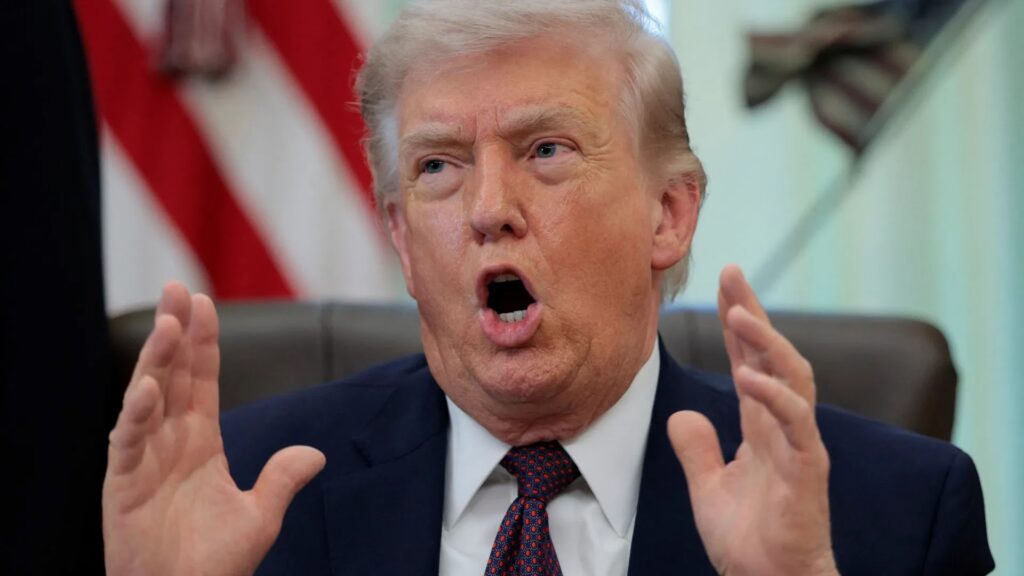
“Furious Trump threatens Iran with new attacks: ‘Open that damn street, otherwise you will end up in hell.'”
In my view, this is a pretty strong statement for an American president who indicated before and at the beginning of his term that world peace was important.

Religion, Gnosticism, and Contradictions in Trump’s Beliefs

Open that damn street, or you’ll end up in hell.
And I continue to find it strange that this man is not affiliated with any denomination, but then visits a Gnostic church, and also that he keeps making similar statements. Yes, if he is Gnostic, then he does not need a church, because the believers of this faith do not find the Bible credible, and believe in the unity of man. They believe that we are all a unit, and therefore should treat every person peacefully. After all, we are one, and that is why they put respect first.

The Strait of Hormuz Crisis: Oil Supply, Economy, and Global Impact

Has Donald Trump finally realized what he had not understood beforehand?
Did Trump not realize that by starting the war with Iran he closed the Strait of Hormuz to almost the entire rest of the world with regard to the use of diesel oil and gasoline? This (not too smart) president of the United States of America did not realize that by closing this shipping route—which is vital for oil exports from Iran—he harmed an entire part of the world? Or did this very powerful and important man think he would be able to manage that quickly?

Authoritarian Leadership or Global Control: A Growing Concern

Is Trump a new dictator? Does he want the whole world in his power?
If I follow the line of my thoughts at the moment, then this madman chosen by the American people, with a histrionic personality disorder or attention disorder, is currently hurting almost the entire world.

Histrionic Personality Disorder in Leadership: Risks and Global Consequences

The people who suffer from this disorder especially like a lot of attention; they like to be in the spotlight. They tend to exaggerate their feelings considerably and bring them in a dramatic way. If these people (Trump) are not the center of attention, then the disappointment is very great for them.
So they do make sure that they surround themselves with people who dare not contradict them. See how Trump put together his administration, and what part of the American people supports him through thick and thin.

Psychological Leadership Analysis: Instability, Drama, and Decision-Making

Where does a leader with histrionic personality disorder lead his people?

A leader with histrionic personality disorder (HPD) often leads their people (organization, team, or community) into a work environment characterized by drama, uncertainty, superficiality, and a focus on short-term sensation rather than sustainable outcomes. Due to the leader’s intense need for attention and validation, the course often shifts from rational decision-making to decisions based on emotions.

Here’s where this leadership is leading:

  • A culture of drama and instability
  • Superficial decision-making
  • Loss of focus and productivity
  • Emotional and unpredictable direction
  • Destructive dynamics and conflict

Who Really Leads the United States? Power, Influence, and Hidden Forces

Is Trump really the real leader of the United States of America?
Do you find it strange that when I read this profile, I think that Trump may be a puppet of the “real” president of the United States? Could it be that Donald Trump is a “puppet on a string,” led by another person, so that his personality disorder does its job for this person?

Do we suspect the wrong person for all the damage that is currently being caused to our world?
Who is the man or the woman in the shadows?

Read more: Live update


Two US Plains down: Iran is on Trump’s 24-hour timeline (April 6)

Iran claims it downed 2 US Black Hawks during the American rescue mission for an airman who spent nearly 36 hours inside Iranian territory before being rescued. (Representative photo. Credits: Reuters)

The story of the whole U.S. on Friday, April 3, 2026, air superiority was shattered when two American warplanes, Blackhawk—an F-15E Strike Eagle and an A-10 Thunderbolt II—were downed during combat operations over Iran. The A-10 pilot was able to eject and was rescued in Kuwaiti airspace.

However, the F-15E crew had a much worse fate in the mountains of Kohgiluyeh and Boyer-Ahmad Province. After a frantic 48-hour combat search-and-rescue (CSAR) operation, President Trump confirmed on Sunday, April 5, that the last missing crew member, a high-ranking weapons systems officer, was found in a miraculous night mission. As the April 6 deadline approaches, the situation is getting worse. This goes against what the White House said on Wednesday night, that Iran’s air defences had been 100 percent destroyed.

US Two Planes Down

In the theater of modern war, there is a specific, gut-wrenching frequency to the silence that follows a lost signal. On the afternoon of Friday, April 3, 2026, that silence echoed across the command centers of Operation Epic Fury. For thirty-two days, the American public had been told that the skies over Iran were a private playground for U.S. and Israeli stealth tech. Then, the “invincible” metal began to fall.

The first blow landed in the rugged, rain-slicked peaks of southwestern Iran. An F-15E Strike Eagle, the workhorse of the tactical air fleet, vanished from radar after being bracketed by what analysts suspect was a man-portable air-defence system (MANPADS). Minutes later, reports filtered in of an A-10 Thunderbolt IIthe legendary Warthog—limping toward the Persian Gulf, its titanium skin shredded by ground fire.

The A-10 pilot, displaying the grit typical of the “A-10 cult”, managed to coax his dying machine into Kuwaiti airspace before punching out into the sea. He was home within the hour. But for the two-person crew of the F-15E, the nightmare was just beginning.

The Hunt in the Mountains

As we explored in the analysis of Tehran’s rainy-day defences, the Iranian regime has pivoted to decentralised, low-tech resistance. Iranian state media wasted no time, broadcasting images of twisted metal in the back of a truck and urging local nomadic tribes to “hunt the enemy pilots” for a bounty.

The pilot of the F-15E was recovered in the initial hours of the chaos, but the Weapons Systems Officer (WSO)—later identified as a U.S. Air Force colonel—was missing in the heart of hostile territory. This was the exact scenario the Wednesday address had promised would never happen. Trump had stood before the nation claiming Iran’s radar was 100 per cent annihilated, yet here was proof that “air superiority” does not mean zero risk.

The Midnight Miracle: The Rescue of the Colonel

The rescue operation that unfolded over the weekend of April 4-5 will likely be studied in military academies for decades. It was a race between U.S. HC-130J Combat King II planes and Iranian search parties. On the night of Sunday, April 5, under the cover of a moonless sky, U.S. Special Operations teams executed a “snatch-and-grab” mission so audacious that it required the Americans to scuttle their own damaged aircraft to prevent a technology leak.

President Trump, speaking from the White House just hours ago, confirmed the Colonel’s rescue. “He sustained injuries, but he will be just fine,” the President remarked, shifting his tone from the mocking bravado of his tech-firm comments to a somber recognition of the “miraculous” nature of the save.

The Fragile Shield of April 6

The downing of two planes in a single day is a jarring reality check for the 15-point peace plan currently sitting in Islamabad. While the U.S. has hit over 12,300 targets, the “Stone Age” warning has clearly not intimidated the IRGC’s frontline units.

The loss of these aircraft highlights a critical flaw in the “Epic Fury” doctrine: you can bomb a radar site, but you can’t easily find a soldier with a shoulder-fired missile hidden in a mountain crevice. As the April 6 deadline approaches tomorrow, the “Total War” is no longer a theoretical threat; it is a landscape of burning wreckage and high-stakes survival.

The U.S. has regained its pilots, but it has lost the illusion of an untouchable sky. As the world waits for the clock to strike 8:00 P.M. ET tomorrow, the question isn’t just whether Iran will sign the deal—it’s how many more “miracles” the U.S. Air Force has left in the tank.

Frequently Asked Questions (FAQs)

Q1: What exactly happened to the two U.S. planes?

On Friday, April 3, an F-15E Strike Eagle was hit by ground fire (likely a MANPADS) over southwestern Iran. Separately, an A-10 Thunderbolt II was damaged and subsequently crashed in the Persian Gulf region.

Q2: Were the pilots rescued?

Yes. As of Sunday, April 5, all three airmen involved are accounted for. The A-10 pilot and the F-15E pilot were rescued early on, while the F-15E Weapons Systems Officer (a Colonel) was recovered in a daring night-time mission on Sunday.

Q3: Does this mean the U.S. doesn’t have air superiority?

Military experts, including General David Deptula, argue that the U.S. maintains “a very high degree of air superiority,” but these losses prove that “air superiority does not mean zero risk,” especially against man-portable missiles.

Q4: How did Trump react to the planes being shot down?

Trump initially downplayed the incident, telling NBC News, “It’s war,” but later used the successful rescue to praise the military’s “miraculous” capabilities. He maintains that the April 6 deadline for the peace plan is still in effect.

Q5: What happened to the wreckage of the F-15E?

U.S. forces reportedly scuttled (destroyed) the remaining wreckage during the rescue mission to ensure that sensitive technology did not fall into Iranian or Russian hands.


Iran war live update: Iran agreed to Trump’s Ceasefire terms

Under pressure as domestic petrol prices soar, US president says no deal needed to end war on Iran. | aljazeera.com

Iran says it shot down two Black Hawk helicopters and a C-130 plane that belonged to the US. This claim comes just a few hours after US President Donald Trump said that the American officer who went missing in Iran after his F-15E fighter jet was shot down has been found and is “now safe and sound”.

Iran war live: Trump unveils Lebanon truce as US blockades Iran for a deal. Donald Trump, the President of the United States, said he would invite Benjamin Netanyahu, the Prime Minister of Israel, and Joseph Aoun, the President of Lebanon, to the White House.


Bloody Escalation in Hadhramaut: Dead and Injured as Pro-Transitional Council Protesters Come Under Fire

Deadly clashes erupt in Seiyun, Hadhramaut as security forces open fire on Southern Transitional Council protesters, raising fears of escalation in southern Yemen.

Sunday, April 5, 2026: Hadhramaut Governorate in southern Yemen witnessed a dangerous escalation following clashes between security forces and protesters affiliated with the Southern Transitional Council, resulting in fatalities and injuries after live ammunition was used against demonstrators.

Bloody Escalation in Hadhramaut

According to local sources and media reports, large-scale protests erupted in the city of Seiyun in Wadi Hadhramaut. Participants raised slogans supporting the Southern Transitional Council and condemning government forces, amid rising political and security tensions in the region.

Statements issued by local leaders within the Southern Transitional Council indicated that protesters were subjected to direct gunfire, in addition to arrest campaigns, particularly around Seiyun Airport. The council described the incident as a “dangerous escalation” against peaceful demonstrators.

These developments come amid growing tensions in Hadhramaut since late 2025, driven by the ongoing power struggle between the Southern Transitional Council and forces loyal to the Yemeni government backed by the coalition. The governorate has increasingly become one of the main flashpoints in southern Yemen.

Reports also suggest that the excessive use of force to disperse protests, including live ammunition, has in similar recent incidents led to deaths and dozens of injuries among demonstrators, reflecting the severity of the security situation and the risk of further escalation.

Open Tensions and Risk of Escalation

Observers believe that the events in Hadhramaut reflect a deeper struggle for influence and control, particularly in oil-rich areas, amid overlapping regional and local agendas. They warn that continued targeting of protests could trigger a new wave of violence and undermine chances for de-escalation in southern Yemen.

Meanwhile, supporters of the Southern Transitional Council are calling for an end to what they describe as “repression,” affirming that their protests will continue until their political demands are met, placing the region on the brink of uncertain scenarios in the coming period.


A Geopolitical Earthquake Shakes the Middle East. The Confrontation Between Tehran and Washington

The Middle East has been witnessing a dramatic shift in its security and military landscape since late February 2026, as long-standing tensions between Iran and the United States escalated into a direct, large-scale military confrontation. Here are the details of the ongoing events and their catastrophic repercussions on regional stability and the global economy.

1. Outbreak of War and Field Developments

Actual military operations began on February 28, 2026, when U.S. forces, in coordination with Israel, launched intensive air and missile strikes deep into Iranian territory.

⁠Objectives: U.S. President Donald Trump announced that the operation aims to destroy Iran’s nuclear and missile capabilities to prevent it from acquiring a nuclear weapon.
The Iranian Response: Tehran launched “Operation True Promise 4,” targeting U.S. military sites and vital regional facilities. This led to an unprecedented escalation, including attacks on energy infrastructure and military commands.
Political Situation: Reports (as of April 2026) indicate cracks in the Iranian command and control structure, with calls from former officials, such as Mohammad Javad Zarif, to reach a “comprehensive peace deal” to end the conflict that has claimed the lives of high-ranking leaders.

2. “Choking” the Waterways: Hormuz and Bab el-Mandeb

Sea straits have become the most impactful battleground for global national security, used by Iran as a strategic leverage tool:

Strait of Hormuz: The strait has faced a near-total closure and maritime disruption since the early days of the war. Tehran announced selective control over ship movements, halting the flow of approximately 20% of global energy trade through this vital artery.
Bab el-Mandeb Strait: Threats of expanding the conflict into the Red Sea have intensified. Experts warn of a “double shock” if the closure of Hormuz coincides with disruptions in Bab el-Mandeb, pushing the conflict beyond its regional frame into a global crisis.

3. Global Oil: Historic Price Surges

The war immediately reflected on the energy markets, which are currently in a state of anxiety and anticipation:

Price Levels: Oil prices surged past the $100 per barrel mark, with expectations to reach record levels (between $150 and $200) if severe and sustained supply disruptions occur.
Risk Premium: Investors added a high “risk premium” to prices due to mutual shelling targeting oil facilities in the Gulf and Iran, damaging global supply chains.
Living Impact: The effects of the war have begun to reach consumers globally through rising gasoline and basic commodity prices, sparking a global inflationary wave.

4. Regional and International Repercussions

Map Changes: Strikes targeted sensitive infrastructure (steel plants, power stations), threatening an internal economic collapse in Iran.
Alliances and Logistics: Major shipping companies (such as Maersk and Hapag-Lloyd) rushed to reroute around the Cape of Good Hope, increasing shipping costs and maritime insurance.
The American Public: President Trump faces internal pressure due to the rising cost of living and public anger over the consequences of direct military involvement.

The region remains in a state of turmoil, awaiting paths of negotiation or military resolution, amid warnings that continuing to “choke” these waterways could drive the world into an economic recession not seen in decades.


US-Israel-Iran War Update: Trump said “If… We are going to hit each and every one of their electric generating plants”

US-Israel-Iran War Update: Trump said “If… We are going to hit each and every one of their electric generating plants”

On Wednesday, April 1, 2026, President Donald Trump addressed the nation from the White House, declaring that U.S. military objectives in Operation Epic Fury are nearing completion. During the prime-time speech, Trump claimed the Iranian Navy and Air Force have been annihilated and set a two-to-three-week timetable to wrap up the conflict. Crucially, the president issued a final warning.

If Tehran doesn’t agree to the 15-point peace plan by April 6, the U.S. will attack all of Iran’s electric power plants at the same time. Trump also brushed off the IRGC’s recent threats against the US. tech companies, jokingly asking if they were going to use BB guns against big companies like Google and Apple.

The air in Washington on Wednesday night was thick with the kind of tension that only precedes a tectonic shift in global power. Standing in the Cross Hall of the White House, framed by the austere red carpets and the weight of thirty-two days of unprecedented conflict, President Donald Trump delivered what many are calling the Ultimatum of the Century.

April 1, 2026: The president began, his voice carrying the familiar cadence of a man who believes he has already won, “Every American can look forward to a day when we are free from the wickedness of Iranian aggression.”

The core of the Wednesday address was a promise of finality. While the 2026 Iran War has sent global oil prices into a $200-a-barrel fever dream, Trump assured a jittery electorate that the mission is on the cusp of completion. He outlined a two-to-three-week window to finish dismantling the regime’s remaining infrastructure.

According to the president, the core strategic objectives—the destruction of Iran’s navy, the crippling of its ballistic missile factories, and the neutralisation of its air force—have been achieved with brilliant precision. We have all the cards, Trump asserted. They have none.

However, the most chilling moment of the speech came when the President addressed the
April 6 deadline. If the Iranian leadership continues to reject the 15-point peace plan, Trump warned that the next phase of Operation Epic Fury would not be surgical.

If there is no deal, we are going to hit each and every one of their electric generating plants very hard and probably simultaneously,” he stated. He added, with a grim flourish that has become the hallmark of his wartime rhetoric, that the U.S. is prepared to bring the regime “back to the Stone Age where they belong.” Notably, he claimed the U.S. has so far spared Iran’s oil infrastructure only to give the nation a small chance of survival post-war—a mercy that he hinted has an expiration date.

IRGC’s recent threat to target U.S. tech firms. Earlier in the day, the Revolutionary Guard had listed 18 companies—including AppleMeta, and Google—as targets for destruction if further assassinations occurred.

In a moment of characteristic bravado, Trump mocked the threat during an exchange with reporters before the speech, asking if the Iranians intended to use BB guns or something nasty. During the formal address, he pivoted to a more serious tone, warning that any attack on American workers, digital or physical, would be met with overwhelming and disproportionate force.

Read moreKuwait Airport Hit: Trump Reacts to ‘Vicious’ Drone Strike as April 6 Deadline Looms

Addressing the global energy crisis, the President took a controversial stance on the Strait of Hormuz. Rather than promising a U.S.-led reopening, he challenged allies who rely on the waterway to build up some delayed courage and secure it themselves. “Grab it and cherish it,” he urged, suggesting that countries dependent on Middle Eastern oil must take responsibility for their own shipping lanes while the U.S. focuses on the heart of the regime.

As the clock ticks toward Monday’s deadline, the world remains balanced on a knife’s edge. The president has laid out the path to peace: a total Iranian surrender as dictated by the 15 points. But with the IRGC still claiming successful strikes on U.S. assets in Kuwait and Dubai, the “Stone Age” might be closer than anyone dares to admit.


Trump Predicts Iran War Ends in ‘2-3 Weeks’ but Warns Oil Prices Will Stay High for Even Months?

Under pressure as domestic petrol prices soar, US president says no deal needed to end war on Iran. | aljazeera.com

On April 1, 2026, President Donald Trump announced that the 2026 Iran War is expected to “wind up” within two to three weeks, contingent on the acceptance of the 15-point peace plan.

Speaking from Florida, Trump cautioned that global oil prices, currently fluctuating between $110 and $200 per barrel, will not drop immediately due to extensive damage to Middle Eastern refineries and the ongoing tanker war off the Dubai coast. Trump’s new foreign policy mandate, summarised as “Go get your own oil“, marks a shift toward absolute American energy independence and a warning to nations relying on U.S. military protection for energy security. As the April 6 deadline approaches, the world remains in a state of strategic suspended animation, awaiting the President’s formal televised address.

There is a specific kind of silence that precedes a tectonic shift in history. On this first day of April, that silence was broken by the familiar, percussive cadence of a president who treats global conflict like a hostile takeover. While the smoke still rises from the shattered mirror of the oil tanker of Kuwait International Airport, President Trump has laid out a timeline that is as ambitious as it is brutal.

It’s winding up, Trump told reporters, his eyes already fixed on a post-war horizon.

“Two weeks, maybe three. We’ve done more in a month than they did in twenty years. But don’t expect the gas pumps to celebrate just yet.”

Thus, the prediction that the most significant conflict of the 21st century could conclude in twenty-one days has sent shockwaves through the Pentagon. Military analysts, still grappling with the Silicon Siege and the Houthi escalation in the Red Sea, see a much longer road. But Trump’s 3-week window isn’t a military forecast; it’s a political ultimatum.

Furthermore, this is proof that by setting this clock, Trump is telling the transitional leadership in Tehran that the 10-day pause was their only grace period. If the 15-point plan isn’t signed, the “winding up” won’t be a diplomatic exit—it will be a kinetic conclusion.

For the average citizen watching the digital tickers at the gas station, the president offered a dose of cold, hard candour. Despite his promise of a swift end to hostilities, Trump warned that oil prices will not drop immediately.

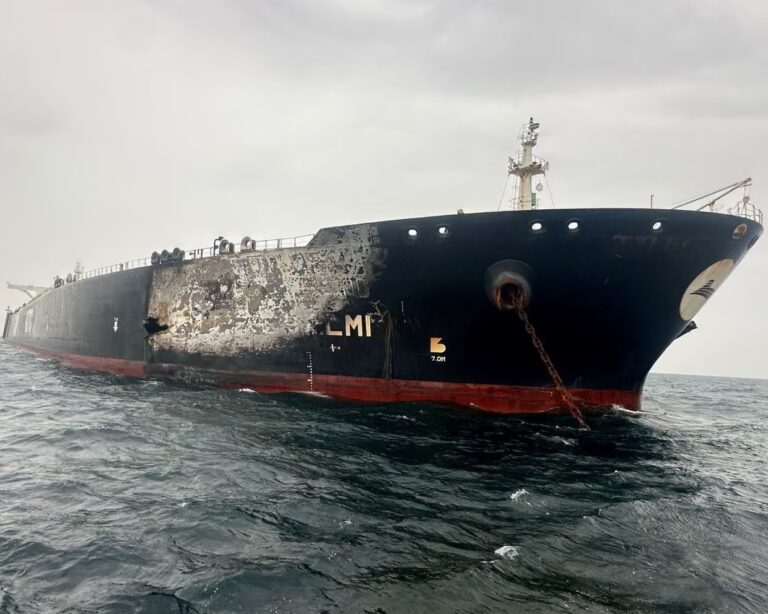
You can’t just flip a switch,” Trump remarked, referencing the attack on the Al Salmi tanker and the precision strikes on Tehran’s jamming stations. “The refineries are hit, the pipes are broken. It’s a mess. A very big, expensive mess.”

Experts agree. With the Strait of Hormuz effectively a no-go zone and the Litani River bridges destroyed in Lebanon, the logistical architecture of the global energy trade has been decapitated. Even if the guns fall silent tomorrow, the Risk Premium will remain baked into every gallon of crude until the wreckage is cleared and the tanker war ends.

Trump: “Go Get Your Own Oil”

Perhaps the most significant takeaway from the president’s impromptu remarks was a five-word phrase that may redefine the next decade of geopolitics: Go get your own oil.

This is the Trump Doctrine in its purest form. It is a blunt message to European and Asian allies who have long relied on the U.S. Fifth Fleet to subsidise their energy security. Trump is signalling that the era of the global policeman is being replaced by the national fortress. If you want the oil of the Middle East, you provide the boots, the ships, and the treasure to protect it. America, with its fracking reserves and newly uncapped domestic potential, is looking inward.

The world is now in a state of strategic suspended animation. Every capital from London to Beijing is waiting for the formal “Address to the Nation” scheduled for later this week. This isn’t just about a ceasefire; it’s about the terms of a new world order.

Now the question is, will the 82nd Airborne begin a withdrawal? Or is the 3-week window simply the final countdown to a ground invasion? As the April 6 deadline looms like a guillotine, the President seems content to keep the world guessing. He is a man who knows that in the art of the deal—and the art of war—the most powerful weapon is the one you haven’t used yet.

Frequently Asked Questions (FAQs)

Q1: When does Trump say the war will end?

President Trump has predicted the war will “wind up” in approximately two to three weeks, provided the Iranian leadership accepts the U.S. terms for peace.

Q2: Why won’t oil prices drop immediately after the war?

Significant damage to oil tankers, refineries, and pipelines in the Persian Gulf and Red Sea means that supply chains will take months to repair. Additionally, the “risk premium” remains high as long as the region is unstable.

Q3: What does “Go get your own oil” mean?

It is a shift in U.S. foreign policy toward energy isolationism. Trump is suggesting that the U.S. will no longer be responsible for protecting the energy supplies of other nations unless they contribute significantly to their own defence and the security of the region.

Q4: Is the April 6 deadline still active?

Yes. The 10-day “pause” on major energy infrastructure strikes expires on April 6, 2026. This remains the hard deadline for the signing of the 15-point peace plan.

Q5: What is expected in Trump’s upcoming speech?

The speech is expected to detail the final terms of the peace deal, the status of the 82nd Airborne, and the future of U.S. involvement in the Middle East.


Nostradamus Predictions 2026: Threat of World War 3: US-Israel-Iran War

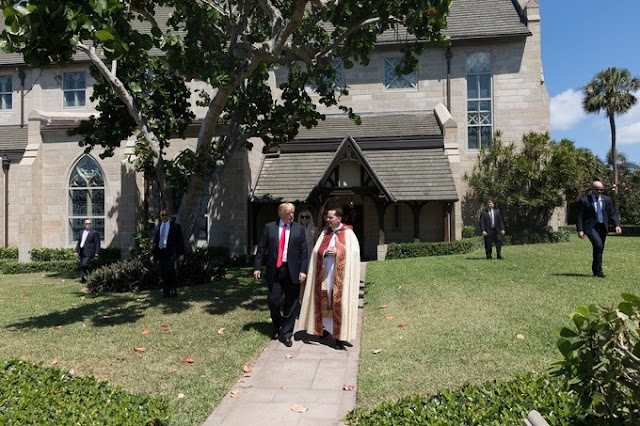
Trump by the Episcopal Church of Bethesda, Wikipedia

Nostradamus, born as Michel de Nostredame, was
not only a pharmacist but also one of the most famous seers in history. In his
world-renowned Quatrains, written as early as 1544, he described a
future in which certain individuals would emerge who carry both good and evil
within them—people capable of shaping the fate of the world in both destructive
and positive ways.

Among these mysterious figures, two names stand
out: the “Antichrist” and Chiren. These are not just names but symbols
of two completely different visions of the world. The Antichrist represents
chaos, conflict, and destruction, while Chiren represents balance,
leadership, and ultimately peace. According to many interpretations, these two
forces are destined to appear around the same period in history. 

Is Donald
Trump the Antichrist? A Controversial Interpretation

One of the most debated questions today is
whether a modern political figure could fit the role of the Antichrist
described by Nostradamus. In this context, the name of Donald Trump often comes
up.

Donald Trump is seen by supporters as a strong
and decisive leader but by critics as a figure who has contributed to
division, tension, and conflict both within the United States and
internationally. His rhetoric, policies, and influence on global politics have
made him one of the most polarising figures of our time.

It is important to say clearly that linking Trump
to the Antichrist is a speculative and controversial interpretation, not a
proven fact. However, the comparison arises because Nostradamus described
someone who would influence large-scale conflict and disrupt the global order.
For some observers, the parallels—whether real or imagined—are enough to raise
questions.        

 Religion,
Power, and Division in a Modern World

Throughout history, many wars have been rooted in
religious differences. Conflicts between belief systems—whether between
Christianity, Islam, or other faiths—have shaped civilizations and caused deep
divisions.

Donald Trump is often described as a strong
Christian figure. He was raised Presbyterian and has publicly identified as a
Christian, even appearing on television holding a Bible shortly after becoming
president. At the same time, he stated in 2020 that he no longer formally
aligns himself with a specific church or denomination.

This creates an interesting contradiction.
Religion plays a visible role in his public image, yet his personal beliefs
remain somewhat unclear. In a world where religion can unite but also divide,
the beliefs of powerful leaders can have significant global consequences.

Questions
About Faith, Gnosticism, and Belief

Another question that arises is whether Trump
believes in a traditional concept of God or religion at all. He is known to
attend services at an Episcopal church in Florida, which some associate—rightly
or wrongly—with elements of Gnostic thought.

Gnosticism is a belief system that differs from
mainstream Christianity. It emphasizes inner knowledge and personal spiritual
experience rather than strict adherence to traditional doctrine. Some
interpretations even challenge the historical existence of Jesus Christ, which
stands in contrast to widely accepted Christian beliefs.

If a world leader were influenced by such ideas,
it could shape how they view morality, conflict, and other nations. This leads
some to speculate: does Trump act מתוך religious conviction, personal belief,
or primarily from a sense of power and self-interest?

Are We on the
Brink of World War 3?

The growing tension in global politics has led
many people to ask whether we are approaching a third world war. Governments,
including in Europe, have issued warnings about increasing instability and the
possibility of long-term conflict.

Nostradamus’ prediction of a “very long war”
resonates strongly in this context. While it is impossible to confirm whether
his writings truly predict modern events, the parallels are striking enough to
keep the discussion alive.

At the same time, history shows that fear of
global war has existed in many different periods. Not every crisis leads to
worldwide conflict. Still, the combination of political tension, military
power, and ideological division makes the question more relevant than ever.

Chiren: The
Hope for Peace After Chaos

While much attention is given to the Antichrist,
Nostradamus also described a second figure: Chiren. This figure is often
overlooked, yet it may be the most important part of his prophecy.

According to interpretations, Chiren would
be a European leader, possibly from France, who rises during or after a period
of great suffering and war. Unlike the Antichrist, Chiren represents
restoration, wisdom, and long-term peace.

The idea of Chiren suggests that even in
the darkest times, there is the possibility of renewal. Where the Antichrist
divides, Chiren unites. Where one brings conflict, the other brings
stability.

Hope in Dark
Times: A Message Beyond Fear

Despite the heavy themes of war and conflict,
both Nostradamus’ writings and religious texts offer a message of hope. The
Qur’an states in Surah 94: “Verily, with hardship comes ease.”

This idea is echoed in the concept of Chiren.
No matter how intense the chaos may become, it will not last forever. Periods
of suffering are followed by periods of recovery and peace.

Whether one believes in prophecy or not, this
message remains powerful. The future is not fixed, and humanity continues to
shape its own destiny. The question is not only whether Nostradamus was right but how we respond to the challenges of our time.  


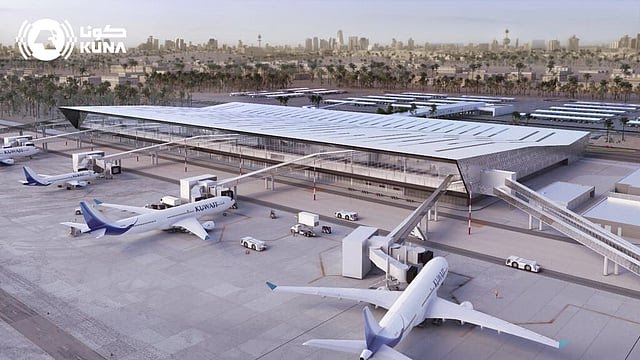
Kuwait Airport Hit: Trump Reacts to ‘Vicious’ Drone Strike as April 6 Deadline Looms

Kuwait Airport Hit: Trump Reacts to 'Vicious' Drone Strike as April 6 Deadline Looms. | Photo: Gulf News

April 1, 2026: Kuwait International Airport (KWI) was targeted by a swarm of suicide drones and cruise missiles launched during the 85th wave of Iran’s “Operation True Promise 4.” While Kuwaiti and U.S. air defenses intercepted a majority of the projectiles, terminal damage has suspended all civilian flights.

Furthermore, Military analysts suggest the airport was targeted because it serves as the primary arrival hub for the U.S. 82nd Airborne Division and the 10,000 additional troops recently deployed to the region.

President Trump responded by labeling the strike a vicious provocation, asserting that while the April 6 strike pause remains in effect, the U.S. is prepared to obliterate Iranian assets if American personnel are harmed. This escalation further complicates the 15-point peace plan currently under negotiation.

Iran-Israel-US war Update: Kuwait Airport Hit by Iran

Almost for decades, Kuwait has been the quiet Room of the Middle East—a neutral ground of high-finance and strategic diplomacy. However, staring of the month, on the morning of April 1, 2026, the mirror was shattered, no casualties reported. The terminal glass at Kuwait International Airport (KWI) didn’t just break; it vaporized under the concussive force of a low-flying drone missile that managed to bypass the outer rings of the Patriot defense batteries.

As the dust settled over the luxury lounges and duty-free shops, a fuel tanker burnt, the world asked one question: Why? Why hit a civilian aviation hub in a country that has spent the last month trying to mediate the 2026 Iran War? In my mind it was because of landing the greatest solders of 82nd Airborne?

The why is written in the passenger manifests of the last forty-eight hours. While the 10-day pause on energy strikes remains technically in effect, the U.S. military buildup has not slowed. Kuwait International Airport has become the primary funnel for the 82nd Airborne Division and in fact, the logistical tail of the 10,000 additional troops President Trump ordered to the Gulf. And may be even more in future if the war does not stop.

This is even smart act by Iran but Trump marked it as height of Cruelty. What three goals may IRGC could achieve by striking the Kuwait airport?

Disruption of Reinforcements: If the runways are cratered and the radar towers are dark, the flow of American army on the ground slows to a crawl.

Psychological Siege: Much like the threat to U.S. tech firms, this strike aims to prove that no corner of the Gulf is truly safe. It sends a message to the Kuwaiti government: Your hospitality toward the Americans has a price.

The Human Shield Reversal: Following the IRGC’s directive for civilians to leave areas near U.S. forces, Tehran is now arguing that by housing U.S. military logistics in a civilian airport, Kuwait has turned its own citizens into human shields.

Trump’s Reaction on Kuwait Airport Hit: The ‘Big Mistake’

The response from the Florida War Room was instantaneous. President Trump, who has spent the last several days touting the success of his 15-point peace plan, did not mince words.

“Iran has made a BIG MISTAKE,” the President posted on Truth Social shortly after the strike. “They hit a beautiful, peaceful airport in Kuwait. Many people are saying this is a sign of weakness, not strength. We have 10 days left on the pause—we are being very patient—but the clock is ticking. If one American hair is touched, the response will be something the world has NEVER seen before. April 6 is coming fast!”

In a follow-up press briefing, White House officials clarified that while the U.S. would not prematurely end the pause on Iranian energy infrastructure, they reserved the right to proportionally respond to direct attacks on logistics hubs. Trump’s rhetoric suggests he is using the Kuwait strike to justify a even harder line in the Silicon Siege negotiations, framing Iran as an unpredictable actor that cannot be trusted with a nuclear program.

The attack on the airport coincides with a significant spike in GPS jamming and electronic interference across the Northern Gulf. As we noted in our analysis of the strikes on Tehran’s jamming stations, the electronic war is now inextricably linked to the kinetic one. Passengers stranded at the Kuwaiti terminals reported that their smartphones and navigation systems failed minutes before the first explosion—a sign that Iran is utilizing “electronic prep” before their drone swarms arrive.

This Digital Darkness is part of the broader Iranian strategy to decouple the U.S. military from its tech-driven advantages. If the IRGC can blind the sensors at KWI, they can turn a multi-billion dollar airport into a graveyard of stalled machinery.

We are now less than five days away from the April 6 deadline. The Houthi front in the Red Sea is already burning, and the tanker fire off the Dubai coast has sent insurance premiums for Gulf shipping to an all-time high.

The strike on Kuwait is a gamble by Tehran. They are testing the Red Line of a President who prides himself on being a deal-maker but has a history of sudden, overwhelming military force. By hitting Kuwait, Iran is betting that the U.S. is too stretched—fighting in the Litani River region of Lebanon and protecting tankers—to launch a full-scale ground invasion.

But as the 82nd Airborne continues to land in the desert, will not run away, they will land even in the sea and as Trump’s rhetoric grows increasingly maximalist that gamble looks more like a suicide pact. The gate of the Gulf is under fire, and the key to the lock—the 15-point plan—is melting in the heat.

Frequently Asked Questions (FAQs)

Q1: Why was Kuwait International Airport targeted?

The airport serves as a critical arrival and logistics hub for U.S. reinforcements, including the 82nd Airborne Division. Iran views the airport as a military target because it facilitates the U.S. buildup ahead of the April 6 deadline.

Q2: What did President Trump say about the attack?

Trump called the strike a “vicious provocation” and a “big mistake.” He warned that while the 10-day pause on energy strikes remains in effect, any harm to American personnel would result in an unprecedented military response.

Q3: Are there any casualties from the Kuwait strike?

Early reports from the Kuwaiti Ministry of Interior suggest 14 injuries among civilian airport staff, but the U.S. Pentagon has confirmed there were no American military fatalities, thanks to successful “C-RAM” interceptions near the terminal.

Q4: Will this end the 10-day ceasefire pause?

Currently, no. The Trump administration has indicated they will wait until the April 6 deadline to launch “maximalist” strikes on Iran’s energy grid, though “proportional” retaliatory strikes on IRGC drone launch sites are expected sooner.

Q5: Is it safe to travel to the Gulf region?

No. All major airlines have suspended flights to Kuwait, the UAE, and Qatar. The U.S. State Department has issued a “Level 4: Do Not Travel” warning for the entire Persian Gulf region.